Loading...
Serving Hialeah, FL and surrounding areas. (645) 300-7796
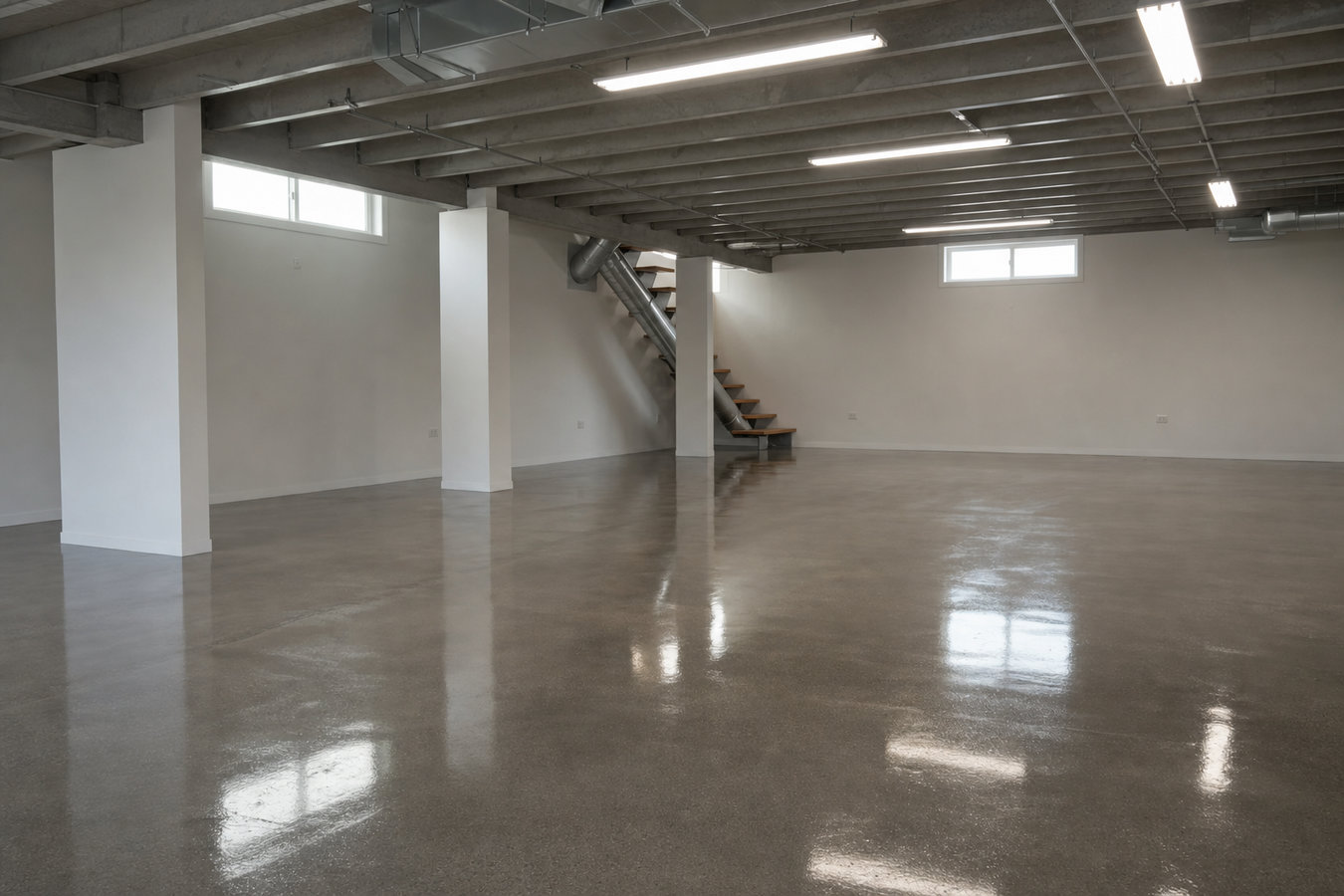
Below-grade and ground-floor slabs in South Florida need coatings that handle moisture from below - not products designed for drier climates. We test before we coat so the floor lasts.
Basement flooring in Hialeah covers the concrete slabs in ground-floor utility rooms, sunken garages, and below-grade storage areas - spaces that share the same moisture challenge as a traditional basement even if they are not fully underground. Most jobs involve either coating the existing slab with epoxy or polishing it smooth, and smaller spaces can often be completed in one to two days once prep work is done.
The most important factor in any of these spaces is moisture. Miami-Dade County has one of the shallowest water tables in the country, which means moisture can push up through a concrete slab from below even on a dry day. A contractor who skips moisture testing is setting the floor up to fail - coatings applied over a damp slab will peel or bubble within months. For spaces converting from storage to active use - a home gym, workshop, or hobby room - pairing a proper coating with concrete grinding and surface preparation first makes a measurable difference in how long the finished floor holds up.
Hialeah averages around 62 inches of rain per year, concentrated in a five-month rainy season. If the space has ever taken on water during a heavy storm, that history matters when choosing the right flooring option.
White powder on concrete is called efflorescence, and it happens when moisture pushes up through the slab and carries mineral salts to the surface. In Hialeah, where the water table is high and humidity is constant, this is one of the most common signs that an existing floor coating has failed. If you see it spreading, the problem will not resolve on its own.
A musty smell in a below-grade space almost always means moisture is present even when you cannot see standing water. In South Florida's climate, that moisture does not go away without intervention - it gets worse and can lead to mold growth on walls, stored items, and framing. A moisture-resistant floor coating helps seal the slab and interrupt that cycle.
Hairline cracks are common in older Hialeah homes where the sandy soil beneath the slab can shift slightly over decades. If you have watched a crack lengthen, or if you can feel a height difference on either side of it, the slab needs attention before any new floor goes down. Coating over an active crack means the crack will show through and worsen over time.
Many Hialeah homeowners are turning ground-floor utility rooms or garages into gyms, workshops, or hobby areas. If the floor is bare, untreated concrete, it will absorb stains, collect dust, and be hard on your joints and feet. A proper coating makes the space cleaner, safer, and more comfortable to actually spend time in.
Every job starts with a moisture test and a full slab assessment - no quotes over the phone without seeing the space first. The most common finish we install in Hialeah below-grade spaces is an epoxy coating system, which bonds directly to the concrete and dries into a hard, seamless surface that resists moisture, stains, and foot traffic. For homeowners who prefer a cleaner, low-profile look, polished concrete is an excellent alternative that grinds the existing slab smooth rather than adding a separate layer on top - it handles humidity well and keeps the space cooler. We also offer concrete sealing as a lighter-touch option for spaces that just need a protective barrier without a full coating.
Every project includes crack repair and any moisture barrier work identified during the assessment. These are not optional add-ons - they are what determines whether the finished floor holds up or fails within a year. We include them in the written estimate upfront so the number you agree to is the number on the invoice.
Suits utility rooms, garages, and storage areas that need a hard, moisture-resistant surface that handles foot traffic and occasional spills.
Suits homeowners who want a sleek, dust-free finish without an additional layer on top of the slab - easier to maintain and stays cooler underfoot.
Suits spaces that need basic moisture protection and stain resistance without a full coating system - a lighter-touch option for lower-traffic areas.
Suits any project where the existing slab has surface damage, settled sections, or moisture issues that need to be addressed before a finish is applied.
Most Hialeah homes were built between the 1950s and 1980s on concrete slab foundations - slabs that are now 40 to 70 years old. Those slabs often have surface damage, settled sections, or cracks that have developed over time as the sandy soil beneath them shifted. In most of the country, a contractor can look at a slab and assume it is relatively stable. In Hialeah, and across Miami-Dade County generally, that assumption does not hold - the shallow water table and porous limestone substrate beneath the city mean slabs absorb moisture from below constantly. The EPA's moisture control guidance for indoor air quality identifies vapor from below-grade slabs as a significant contributor to mold and indoor air problems - something that applies directly to Hialeah's conditions.
We serve below-grade flooring projects throughout the area, including Opa-locka, where older industrial and residential slabs carry the same moisture history as Hialeah, and Westchester, where ground-floor utility spaces in mid-century homes regularly see the same efflorescence and coating failure issues. Understanding what drives those problems locally means we do not guess at solutions - we know what to look for before a product goes down.
We ask about the size of the space, its current use, whether you have had any water issues, and what you want the finished floor to look like. This takes ten to fifteen minutes and costs nothing. We reply within one business day so you are not waiting around to get the conversation started.
A contractor visits in person, checks the slab for cracks and moisture, and takes measurements. In Hialeah, this step matters more than in most cities because of the high water table - quoting without seeing the slab is guessing, and that guess often changes once work begins.
You clear the space completely. We grind down rough spots, fill cracks, and apply any moisture barrier the assessment showed was needed. This prep is what separates a floor that lasts five to ten years from one that starts peeling within months - we do not skip it.
Once the slab is ready, we apply the chosen finish in layers with proper drying time between each. After the final coat, the floor needs at least 24 hours before foot traffic and 48 to 72 hours before anything heavy moves back in. We give you a specific curing timeline upfront based on the product and that week's weather.
We test for moisture before anything goes down - so the floor we install is built to last in South Florida's conditions, not just look good on day one.
(645) 300-7796We test every slab for moisture vapor before recommending a product. In Hialeah, where the water table sits unusually close to the surface, skipping this step is the single most common reason floors fail early. Knowing what is coming up through the slab lets us choose the right barrier and coating combination from the start.
One of the biggest complaints homeowners have about contractors is a low quote that grows once work begins. We include crack repair and moisture treatment in the estimate upfront - because in older Hialeah homes those are nearly always part of the job, not surprises to bill separately after the fact.
We select coatings and sealers formulated for high-humidity, coastal environments rather than general-purpose products. In Hialeah's heat and salt air, a product designed for a dry climate will degrade faster than the same product applied correctly with the right formulation for this region.
Homes built in the 1950s through 1980s present specific challenges - settled slabs, old adhesive, decades of moisture absorption. We factor all of that into the assessment before recommending a finish. A quote from us reflects the actual condition of your slab, not a best-case assumption.
A floor that handles South Florida moisture starts with a contractor who understands what drives it. Get the prep right and the right product down, and the floor holds up. Skip either step and the climate will find every shortcut.
Diamond grinding that opens the slab surface and removes old coatings so new finishes bond properly and last.
Learn MorePenetrating sealers applied to bare or coated concrete to block moisture, staining, and surface wear.
Learn MoreSchedule before rainy season and get your space properly coated before the summer storms put your floor to the test.